


Day-1 of Hornbill Festival at Kisama Heritage Village generated 763.51 kg of waste, with disposable plates and cups being the largest contributor at 210.2 kg, followed by food waste (184.05 kg).
Other types of waste included single-use plastic (SUPs), PET bottles, paper (including carton boards), aluminium cans, glass, bamboo cups, wood, cloth, multi-layered plastics (MLPs), and polystyrene, a representative of the Nagaland Pollution Control Board (NPCB) told the Nagaland Post on Sunday.
Further, referring to the air quality at the venue, the NPCB representative disclosed that the concentration level was 239 μg/m3 at the main arena and 125 μg/m3 at the station above the bamboo pavilion (IT building), though the acceptable levels of concentration for 24 hours was 100 μg/m3 as per the National Ambient Air Quality Standards (NAAQS).
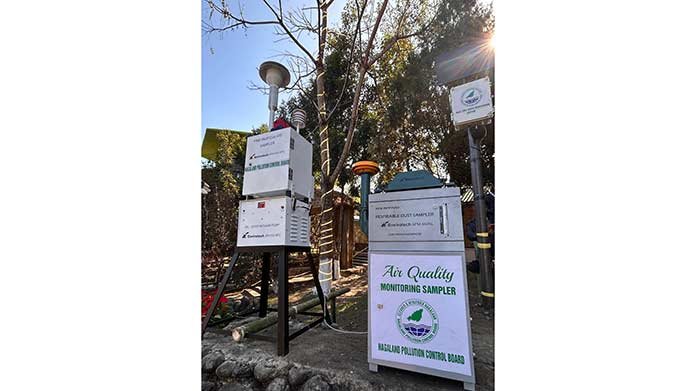
He said the board had installed respirable dust samplers (RDS) and fine particulate matter sensors at two locations in Kisama — one at the main arena and another above the bamboo pavilion — to monitor ambient air quality.
Additionally, a continuous 24-hour noise level meter had been set up to monitor noise levels throughout the 10-day festival.
Regarding the solid waste management during the festival and recognising the significance of waste management, and considering it as a crucial aspect of research and data analysis, the NPCB has initiated a study to assess, quantify, and segregate solid waste.
The representative explained that the initiative was aimed at generating valuable insights that could be utilised in future policy interventions, particularly in promoting environmentally-conscious tourism during not only the Hornbill Festival, but also other festivals in the state.
RELATED POSTS
View all


3 killed in Army chopper crash, Colonel, 2 Majors perish in crash near Viswema village
August 19, 2010 | by admin