

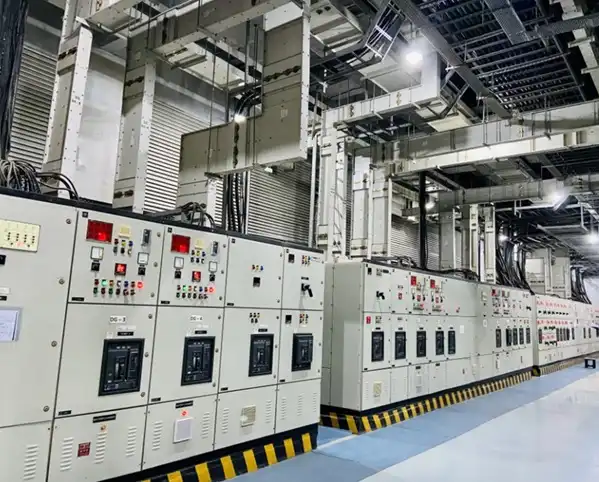
Strong power infrastructure is the basis of every successful project. We see it in sprawling factories, modern data centres, and high-rise buildings. When these places draw large amounts of current, you want a reliable system that handles the demand without trouble.
Many experts now recommend busduct systems because they offer superior performance and flexibility. These modern solutions, combined with the right energy solutions, keep industrial and commercial sites running at full capacity.
Why Are Busduct Systems Replacing Traditional Cables?
Cables have served us for years, but today’s infrastructure demands have evolved. Companies need greater power capacity, compact solutions, and easier ways to scale. Cables usually mean separate conduits, extensive wiring, and extra safety measures. You might see a maze of wires overhead or under the floor, which affects any expansion plans.
Busducts reduce the clutter. They also dissipate heat more efficiently, cutting the risk of overheating in high-current paths. Traditional wiring can weigh more, too, so if you are dealing with tall buildings or large industrial floors, busducts can lighten the structural load.
Lighting/Power Trunking – The Ideal Fit for Offices and Commercial Spaces
Laying out power lines in offices or commercial complexes often turns into a puzzle. You want to keep it sleek, functional, and easily adaptable. Workers might move desks around, or new teams could join, which means rewiring if you use older methods.
Lighting or power trunking offers a neater solution. It is straightforward to install, reconfigure, and even reuse if your office design changes every two years. Many IT hubs and business parks rely on trunking tracks that run overhead. The trunking system carries both power and lighting feeds. If you need an extra point for a cubicle, you can plug it in instead of cutting and splicing multiple wires.
Air-Insulated MV Busduct – Handling Medium Voltage with Ease
Some sites use medium-voltage lines to bridge the gap between transformers and distribution panels. This approach helps them operate large motors, industrial heaters, or other heavy-duty machinery. An air-insulated MV busduct works great for those demands.
It can handle voltages up to 36 kV and endure significant short-circuit forces. You see it in big plants, rail systems, and power stations where the environment might be dusty, hot, or unpredictable.
Sandwich Busduct – Compact and Modular for Low Voltage
Low-voltage power distribution can still involve large currents. Think about a shopping mall running multiple escalators, hundreds of lights, and big air-conditioning units. Or an assembly line that powers welding machines and conveyor belts. In such places, you need a busduct that is simpler to handle and does not hog space.
A sandwich busduct uses a tight, stacked design to fit within a smaller enclosure. It can handle up to 6300 A capacity. Builders often prefer it for high-rise towers or busy airports where you cannot afford bulky wiring setups. This busduct meets IEC 61439-6 standards and resists short-circuit currents, so it is not just about saving space. It also ensures the system remains safe under fault conditions.
Air-Insulated LV Busduct – Flexible Power for Hefty Loads
Industrial plants sometimes need high currents at relatively low voltage levels. An air-insulated LV busduct can manage up to 7 kA, which covers a wide range of applications. It might run between a transformer yard and the main switchboard or extend across a production floor.
Engineers like air-insulated LV busduct that can handle big electrodynamic forces. That means the busduct is less likely to bend or damage if there is a short-circuit event. These busducts also come with ASTA-certified designs, ensuring compliance with top international standards. If you are dealing with heavy loads, that certification adds peace of mind.
A Quick Look – Busducts vs. Traditional Cables
| Feature | Traditional Cabling | Busduct Systems |
| Installation Time | Time-consuming, labour-heavy | Quick, modular assembly |
| Scalability | Hard to expand or modify later | Simple to extend or reconfigure |
| Heat Management | May struggle with cooling in tight spaces | Better heat dissipation |
| Space Requirement | Requires extra space for cable trays | Compact, uses minimal floor or ceiling area |
| Maintenance | Complex to inspect and fix | Easier access for checks, fewer points of failure |
Why Industry Leaders Trust Godrej’s Busduct Approach?
Godrej Enterprises Group invests in high-quality materials and advanced engineering to handle the worst-case scenarios. Clients often choose busducts that match their site’s exact needs rather than forcing a standard product into a unique project. This level of detail ensures safer and more stable power distribution, reducing unplanned shutdowns.
Industry insiders also mention how a well-planned busduct solution can last decades with minimal upkeep. That stability means fewer disruptions for expansions or modifications. Some building owners treat busducts as a long-term asset, not just another piece of hardware.
Conclusion
Power distribution shapes the productivity of any big or small operation. While cables still work, they often stumble as projects expand or become more complex. Busduct systems come to the rescue by delivering stronger reliability, easier upgrades, and improved safety. They also complement modern energy solutions, helping you cut running costs while boosting performance.