

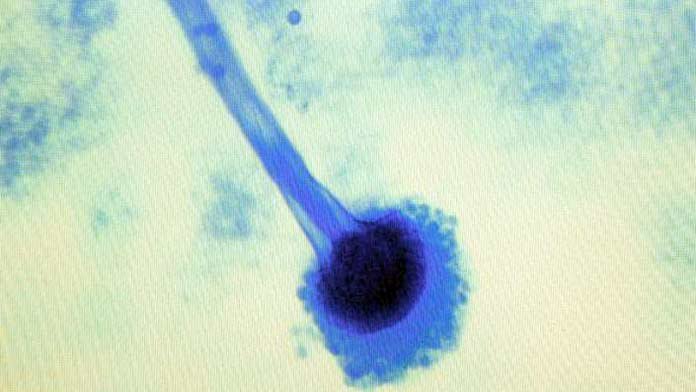
Experts say mind-controlling mushrooms aren’t an imminent threat, but anti-fungal drug resistance is.
Here’s the science fact and fiction behind the show, and the possibility of a fungal pandemic.
The first season of HBO’s “The Last of Us” ends on Sunday, but there’s still much to learn from the science that inspired it.
In most ways, the show depicts a classic zombie apocalypse.
One morning, everybody is going about their normal life. There’s a mention on the radio of chaos in Jakarta. And by nightfall, twitchy, possessed once-humans are sprinting after the main character.
This time, though, it’s a fungus turning people into zombies.
The new scenario, first realized in the video game that the show is based on, is making viewers wonder whether a fungus pandemic can happen in real life.
“A fungal pandemic is definitely possible,” Norman Van Rhijn, a mycologist researching fungal infections at the University of Manchester, told Insider in an email.
“The potential is huge for what can emerge and become a pathogen,” Tom Chiller, chief of the fungal disease branch of the US Centers for Disease Control and Prevention, told Insider. “I am not going to be surprised that more fungi emerge as human pathogens, that become more challenging to treat and more infectious.”
Here’s the science fact and science fiction behind “The Last of Us,” and the threats that fungi pose.
Cordyceps is real, but it only overtakes the brains and bodies of insects — most famously, ants.
The fungus grows inside an ant’s body, causes the ant to climb upwards, and then sprouts from its head and releases spores, attempting to spread itself far and wide.
Cordyceps can’t survive at human body temperature, so it can’t infect us. But other species of fungus produce substances with mind-altering qualities that can affect human behavior.
Psilocybin facilitator students sit with eye masks on while listening to music during an experiential activity at a training session near Damascus, Oregon.Andrew Selsky/AP Photo
Some historians attribute the Salem Witch Trials to ergot poisoning, saying that women began behaving strangely and accusing each other of witchcraft after eating infected rye. The psychoactive substance LSD is derived from ergot.
“Every time you have a beer, your behavior is affected by the byproduct of a fungus, which is ethanol,” David Hughes, who has studied Cordyceps and consulted on the video game “The Last of Us,” told Insider.
The fungus Cryptococcus can also spread from the lungs to the brain and cause meningitis — inflammation — that can alter behavior.
Unlike on TV, though, mind-altering fungus “doesn’t jump into our body and affect a behavior that enables future transmission,” Hughes said.
Fungal diseases can jump from animals to humans. But the idea that a fungus like Cordyceps could mutate enough to make the giant leap from insects to humans, and still keep its ability to effectively manipulate behavior, is far-fetched.
In the infectious-disease world, “never say never,” Chiller said.
“But I will say that there’s a lot, a lot of hurdles that need to be overcome,” he continued. “An ant and a human are dramatically different. We have immune systems, we live at different temperatures, you know, our body temperature is much higher. So there are just some fundamental things that are going to be exceedingly hard for that particular fungus to overcome.”
A mycology specialist in the Vanderbilt Clinical Microbiology Lab for patient care examines samples to isolate and identify specimens for growth in Nashville, Tennessee.Harrison McClary/Reuters
In “The Last of Us,” the first cases of fictional human Cordyceps appear in Jakarta, Indonesia, where the government asks a leading mycologist to identify the fungus under a microscope and wriggling in the mouth of a dead civilian. Horrified, she learns that 14 people who worked with the victim have disappeared.
“There is no medicine. There is no vaccine,” she grimly informs a government official. She recommends that the government bomb the entire city to contain the fungus.
In real life, it’s true that there is no vaccine for deadly fungal infections (though experts don’t recommend bombing as a substitute). There are only a few classes of drugs to treat them, and they aren’t always reliable cures.
In fact, because fungi are so similar to humans at the cellular level, many of the drugs that fight them are also toxic to human bodies.
According to Global Action for Fungal Infections, fungi kill more people than malaria.
“The problem with fungi is we don’t have a lot of things in our toolkit to control them,” Hughes said.
Some deadly fungi, like Candida auris, which emerged in 2009, have even developed a powerful resistance to the anti-fungal drugs we do have. In hospital outbreaks, Candida auris has killed anywhere from 29% to 53% of its victims, according to the World Health Organization.
(Yahoo Entertainment)