

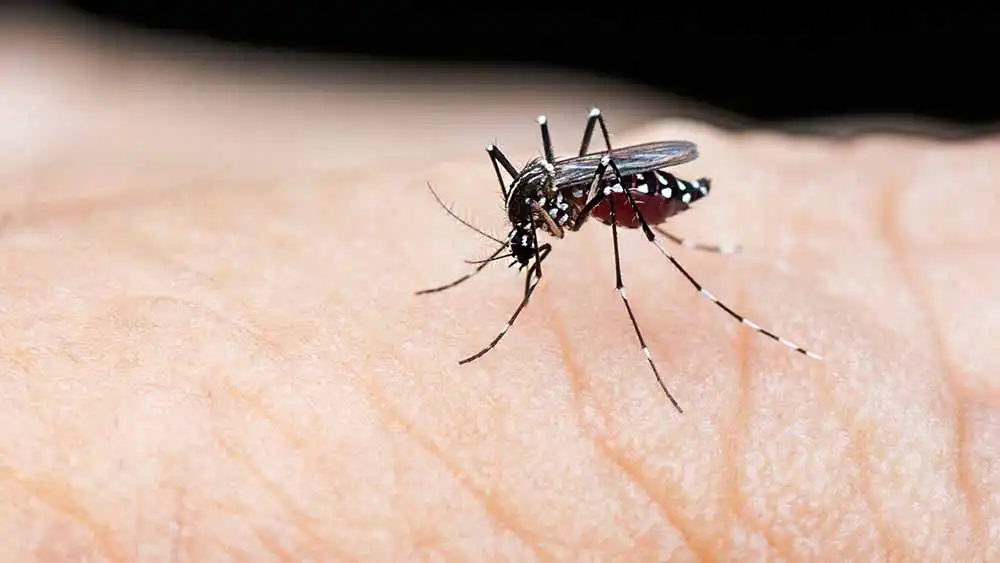
Rising temperatures, unprecedented floods, and challenges in public health infrastructure are all contributing to the rising burden of dengue in India, said experts on Wednesday, ahead of National Dengue Day. National Dengue Day is observed every year on May 16.
The theme this year is ‘Dengue Prevention: Our Responsibility for a Safer Tomorrow.’
Dengue is a vector-borne disease transmitted through the bite of an infected mosquito and is endemic to more than 100 countries.
Urbanisation and the density of the human population also facilitate the rapid spread of the virus. According to the experts, the transmission of dengue is closely associated with three key factors: Rainfall, humidity, and temperature which dictate the geographies in which it spreads and the transmission rate.
“Unpredictable rains, coupled with rampant construction and inadequate drainage systems, create stagnant water pockets that are ideal breeding grounds for mosquitoes,” Dr. Divya Gopal, Internal Medicine, Sir HN Reliance Hospital and Research Centre, told IANS.
“Rising temperatures and unprecedented flooding have also encouraged the spread of mosquitoes well beyond their traditional breeding grounds, bringing dengue fever to areas never before threatened by these debilitating illnesses,” she added.
Despite the challenges, progress has been made, particularly in the development and implementation of strategies for vector control in India, which can be seen in the declining cases and death rates.
As per the data from the Health Ministry’s National Vector Borne Disease Control Programme (NVBDCP), dengue claimed 91 lives and affected 94,198 people in the country in India in 2023 — a marked decline from 1,93,245 cases and 346 deaths in 2021.
However, in 2022, the cases declined (23,3251) but deaths rose (303). Meanwhile, the World Health Organisation (WHO) has prequalified two dengue vaccines — Japanese drug maker Takeda’s live-attenuated TAK-003 and Sanofi Pasteur’s CYD-TDV.