

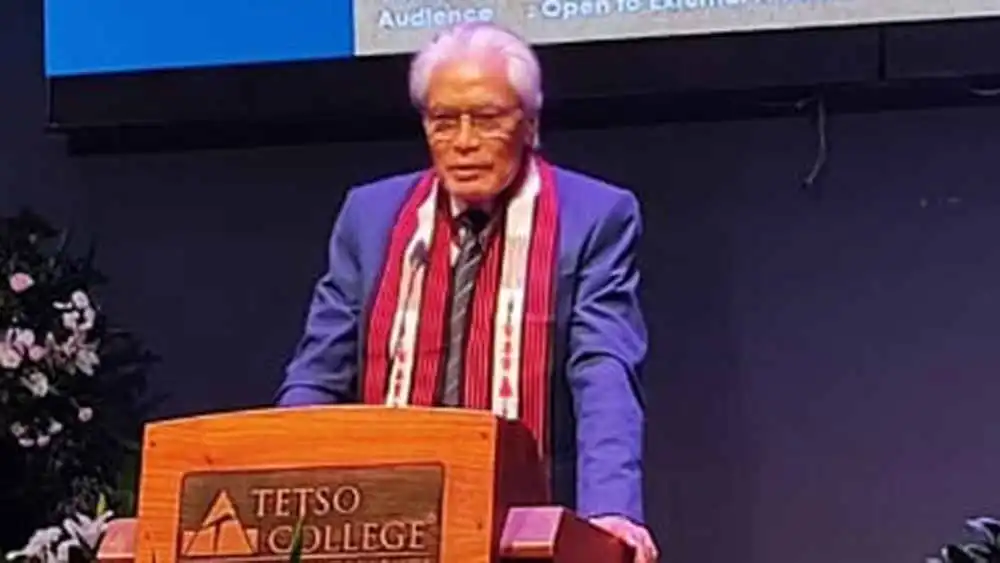
Peace Initiative in North-East India (PINE) president Dr Visier Meyasetsu Sanyü has emphasised oral traditions in preserving culture and identity, as memory helped transmit culture through generations.
He said this while delivering the keynote address at the ‘First Dr PS Lorin Annual Impact Lecture’ on the theme “Reconstructing Naga History from Oral tradition” held at Tetso College on Friday.
Dr Sanyü acknowledged the complex nature of remembering, but stressed focusing on Naga tribes’ rich and largely unexplored languages and histories. He said new technologies enabled broader documentation and sharing of these traditions, fostering community connections. He mentioned that oral histories could enhance cultural understanding and strengthen community ties.
Highlighting the essential link between memory and culture, he said oral traditions were keys to preserving Naga people’s rich heritage, describing them as the “book of life” for indigenous societies, ensuring cultural continuity. However, he cautioned against threats to these traditions from internal and external pressures that could lead to cultural extinction.
He called for integration of oral traditions into formal education to support the survival and growth of indigenous cultures and strengthen community identity. He noted the threats to Naga culture, particularly from tourism, that often turned rich traditions into superficial performances. While events like the Hornbill Festival celebrated culture, he pointed out that these could also disconnect the community’s authentic experiences.
Referring to displacement that led to both cultural renaissance and disconnection from roots, Sanyü, who teaches History at the North Eastern Hill University (NEHU) and a member of the Forum for Naga Reconciliation, and adviser to Global Naga Forum, said this forced a community to adapt, altering beliefs and practices. He called for self-reflection to keep cultural expressions genuine and to reconnect with authentic oral traditions.
Referring to cultural and historical identities among Northeast India’s Christian communities, Sanyü mentioned that superficial practices such as attires were often wrongly linked to faith. He called for a meaningful blend of ancient and contemporary traditions to heal societal wounds and strengthen community ties.
Criticising the central government’s marginalisation of the Northeast, he said the ongoing discrimination was rooted in colonialism. He called for listening to the wisdom of elders to foster a renewed sense of identity and belonging, vital for the region’s cultural revival.
(Speech on p-6)
Speaking on the occasion, Tetso College principal Dr Hewasa L Khing explained that the lecture was designed for all members of the Naga community, and aimed to commemorate the life of Dr PS Lorin and honour his legacy through discussions on topics that reflected his passion for education, social progress, and cultural preservation.
Moderated by Tetso College vice-principal Dr Rosy Tep, the programme was chaired by Benisha Keppen from Rincho Academy, while invocation was made by Council of Rengma Baptist church (CRBC) executive secretary Rev Haiwalo Apon.
The keynote speaker along with other dignitaries watered the founder’s tree, while a video presentation on the biography of Dr PS Lorin, along with short video message from students who received Dr PS Lorin Scholarship, were also played on the occasion.